|
|
|
|
|
|
|
|
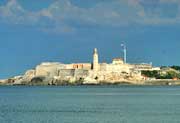
Fort of the Three Kings
|
 |
 |
Destination: Havana
One of Havana's most iconic monuments, This symbolic building was constructed by the Spanish between 1589 and 1630 to protect Havana from incursions by enemy fleets and pirate ships. It is particularly beloved by the city's inhabitants for its lighthouse.
|
|
|
|
|
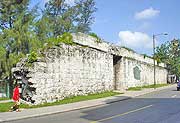
Havana Walls
|
 |
|
Destination: Havana
Originally intended to afford Havana's citizens protection from pirates and bandits, they were constructed with several gates which were closed at night.
|
|
|
|
|
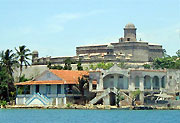
Jagua Castle
|
 |
|
Destination: Cienfuegos
Declared national patrimony. The fortress is an example of the military architecture of the 18th century in Cuba (1745).
|
|
|
|
|
|
|
|
|
Morrillo Fort
|
 |
|
Destination: Varadero
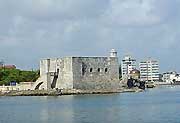
El Morrillo is one of the fortresses built in the 18th century to protect the city from attacks by corsairs and pirates. Today it is a memorial-museum.
|
|
|
|
|
Real Fuerza Castle
|
 |
|
Destination: Havana
It was the first fortress of Havana. Constructed in 1558 by order of Spanish King Felipe II three years after an earlier fortress was destroyed by the French pirate Jacques de Sores, this classic, moat-enclosed fortress was the residence of the local military commanders until 1762.
|
|
|
|
|
San Carlos de La Cabana Castle
|
 |
|
Destination: Havana
In 1762 Carlos III recovered Cuba in exchange for Florida and promptly ordered the construction of what was then the largest fort in the Americas.
|
|
|
|
|
|
|
|
|
San Pedro de la Roca Castle
|
 |
|
Destination: Santiago de Cuba
El Morro stands dramatically on a 60m-high promontory on the east side of the harbor entrance of Santiago de Cuba bay. It was built between 1633 and 1693 and is considered the best-preserved 17th-century Spanish military complex in the Caribbean, and in 1997, it was added to UNESCO's World Heritage List.
|
|
|
|
|
|


 Send e-mail to Us