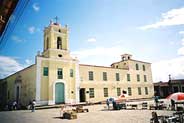
The Historic Center of the City of Camagüey, second largest in the country. Camagüey (known under this name since 1903) has a very particular urban construction style with narrow and tortuous streets that always end in squares and plazas, where we can still see buildings of outstanding historical, social and architectural value.
Camagüey is also known as the City of Tinajones, due to the widespread use of those large recipients of water made of cooked clay.
The birth of Camagüey as a capital in Punta de Guincho, facing the Bay of Nuevitas, dates back to February 2 of the year 1514. Camagüey was one of the first seven villas founded by the Spanish colonizers in the Island and baptized as Santa MarÃa del Puerto del PrÃncipe. Nevertheless, it was only on January 6, 1528 that the capital was definite moved to its current location, between the TÃnima and Hatibonico rivers and well away from the coasts, to avoid the frequent attacks of pirates and corsairs.
The applies to the Teatro Principal (Main Theater), venue of the well-known Ballet Company of Camagüey, founded in 1967, and Casino Campestre, the largest of all the parks built in that Cuban city.
Visiting this city gives you the opportunity to enjoy the San Juan Camagüeyano, which became a traditional celebration between 1725 and 1728 that takes place in current times today from 24 to 29 of June; tasting typical dishes the local cuisine like the ajiaco, the jerked beef or the monteria.


 Send e-mail to Us
 The Historic Center of the City of Camagüey, second largest in the country. Camagüey (known under this name since 1903) has a very particular urban construction style with narrow and tortuous streets that always end in squares and plazas, where we can still see buildings of outstanding historical, social and architectural value.


